
Wesley Hall Community Centre: Theory of Change Model in Action

At Wesley Hall, we build our services with purpose, shaped by the people we support. Every project we deliver starts with listening. What’s missing? What’s working? What’s needed? From there, we use a simple but effective approach called the Theory of Change. It helps us map out the steps needed to move from immediate challenges to long-term change.
This means we are delivering more than one-off activities, we are tracking progress, adapting when things don’t work and celebrating what does. From food support and mental health to creative workshops and employment, here’s how that looks across some of our current work:

1. Pantry & Food Bank
What we’re doing:
Weekly food pantry and food bank
Donation drives with local partners
Cooking demos using pantry ingredients
What we’re seeing:
Short-term: 150+ households accessing at least 3 healthy meals a week
Mid-term: Families are learning to budget and make food stretch
Long-term: Pantry users report lower food anxiety and stronger community connections

2. Under-5s Project & Parent Support
What we’re doing:
Weekly sessions with toddlers and parents focused on learning through play
Storytime afternoons and literacy workshops
Monthly ‘Parents Connect’ peer groups
What we’re seeing:
Short-term: 40% boost in school readiness among participating children
Mid-term: Parents share stories of growth and connection
Long-term: Children starting nursery with better communication and confidence

3. Exercise & Movement
What we’re doing:
Seated aerobics, walking clubs and movement sessions for older adults
Dance sessions for single mums and community members
What we’re seeing:
Short-term: Participants feel more flexible and mobile
Mid-term: 30% drop in stress levels
Long-term: People are more active, social and confident
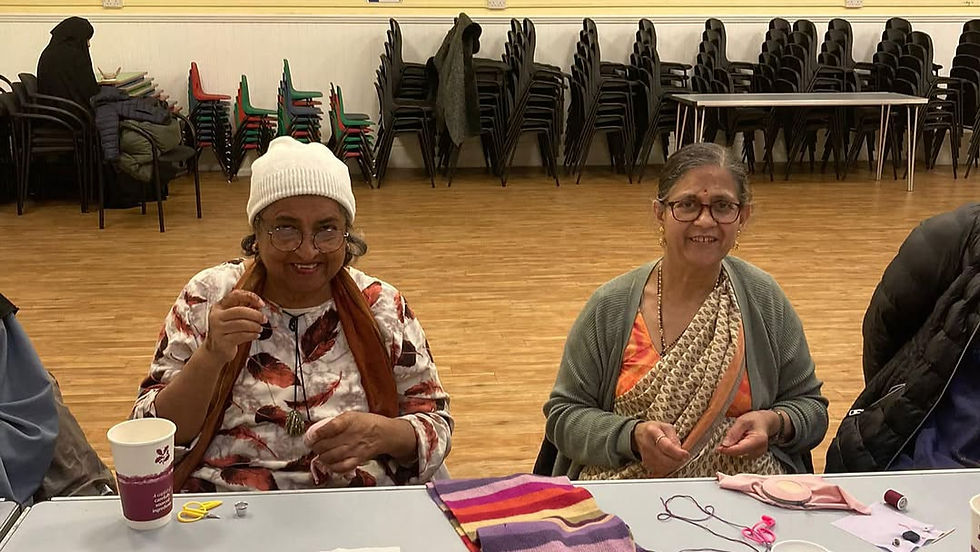
4. Sewing for Confidence & Connection
What we’re doing:
Beginner and advanced sewing classes every week
What we’re seeing:
Short-term: 19 learners built practical sewing skills
Mid-term: Participants report improved confidence, wellbeing and social connection
Long-term: A peer-led mentoring group has formed, with several learners now supporting others

5. English Language Support
What we’re doing:
Weekly conversation circles and literacy classes
Mid-term assessments and ESOL exam prep
Guest sessions from NHS partners to link learners with local services
What we’re seeing:
Short-term: CEFR language improvements within 10 weeks
Mid-term: Participants go on to further study and skill development
Long-term: Better job prospects and smoother integration into local life

6. Driving Test & Employability Support
What we’re doing:
Theory test workshops and mock exams
CV building and interview practice
‘Licence Brunch’ to celebrate learners’ progress
What we’re seeing:
Short-term: 75% theory test pass rate in 6 weeks
Mid-term: More people securing job interviews
Long-term: Greater independence and progress toward employment

7. Day Centre & Wider Community Activities
What we’re doing:
Weekly drop-in café, crafts, exercise sessions and day trips
Heritage and cultural celebrations
What we’re seeing:
Short-term: Over 25 people attending regularly
Mid-term: 80% report feeling less isolated
Long-term: Peer support and social bonds continue outside the centre
Measuring What Matters
To make sure our work delivers real impact, we track progress through:
Attendance and demographics
Surveys before and after sessions
Feedback from participants, partners and staff
Outcome-focused data and stories
Theory of Change: A Real Example
Sewing Classes
Need: Lack of creative outlets, social isolation
Input: Sewing machines, tutors, supplies
Activity: Weekly group sessions
Short-term outcome: 2 certified trainers delivered 12 sessions
Mid-term outcome: Boosted skills, wellbeing and friendships
Long-term outcome: Peer mentoring, income generation for some, cost savings for others
Our Recent Impact at a Glance
Over 500kg of food was redistributed last month, food that would otherwise have gone to waste
12 sewing sessions completed over 3 months, with 5 participants stepping up as mentors
10 learners passed their driving theory test, and 4 have already found jobs

Looking Ahead
Our Theory of Change is a practical tool that keeps our work focused, community-led and accountable. As the needs of our community grow more complex, we’ll continue listening, learning and responding.
Every project we run is about building stronger foundations, not just for individuals, but for the whole community.
Want to get involved or support our work? Contact our team at support@wesleyhallcc.co.uk or call our office on 0116 262 6000.


Comments